Eifel National Park
Authentic. Raw. Vibrant.
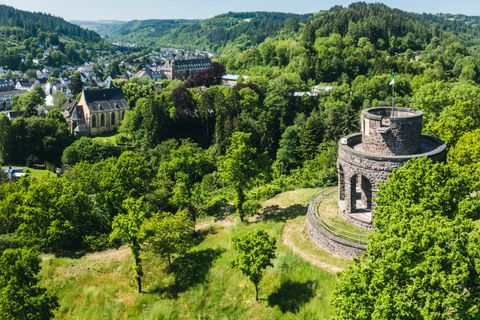
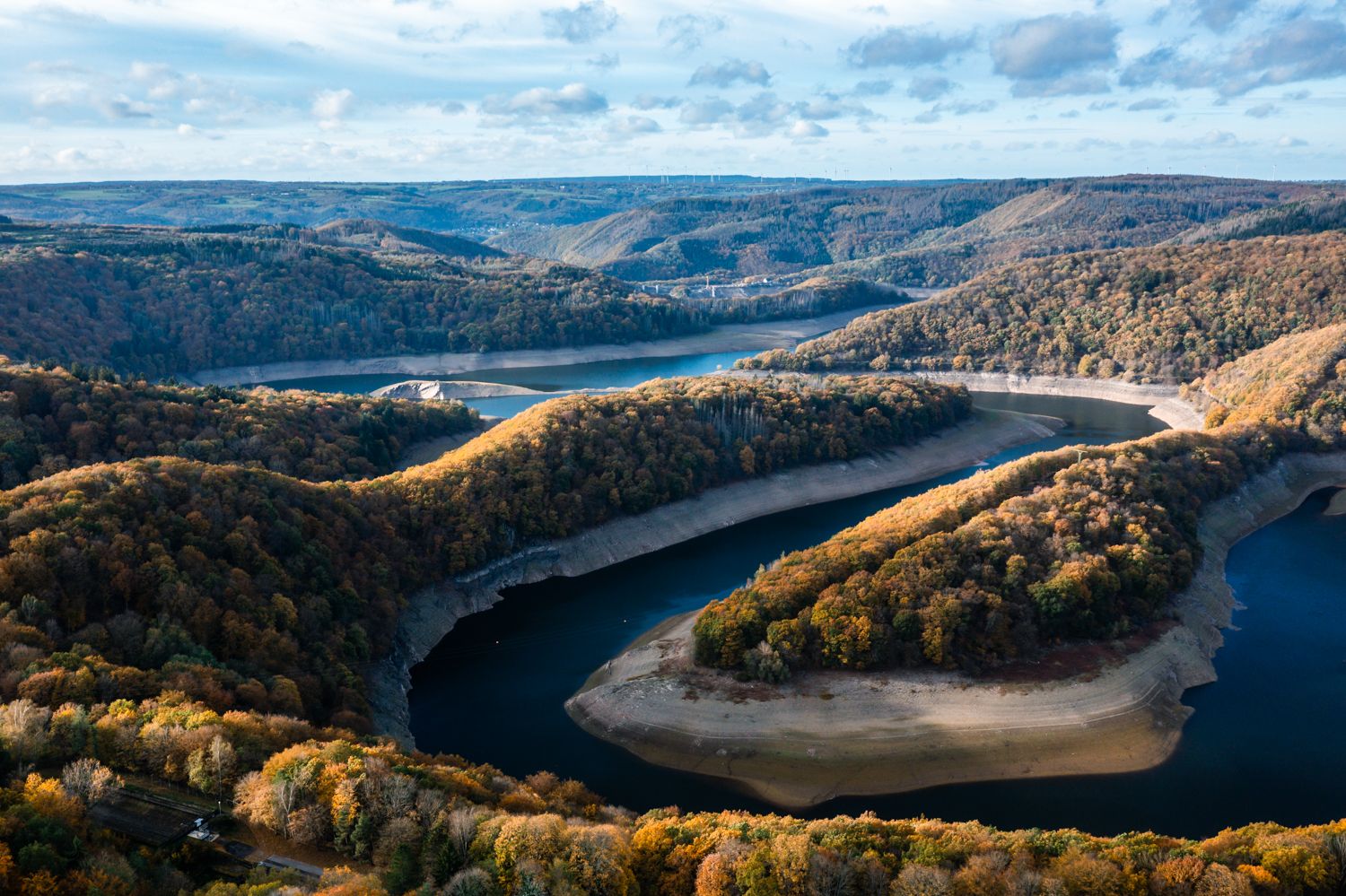
Deep-blue lakes and rivers, cheerfully babbling streams, vast reservoirs, forested mountain ranges, wild daffodils and orchids—nestled within the transnational Hohes Venn Eifel Nature Park, the Eifel National Park stretches across an area of approximately 110 square kilometers. At times it appears rugged and wild, at others delicate and intricate. This vast protected area reveals itself in many facets.
It is the first and so far only national park in North Rhine-Westphalia. Here, nature is allowed to develop largely without human intervention. Over millions of years, the elements have created a landscape that enchants, where nature can return to its own cycle of growth and decay. Primeval forests can re-emerge, as certain core zones are off-limits. Other areas are freely accessible, and a vast network of cycling and hiking trails crisscrosses the protected area, allowing visitors to enjoy the unspoiled natural environment.
This unspoiled nature and seclusion provide an excellent habitat for many plants and animals: a total of 10,960 species have been recorded in the Eifel National Park, more than 2,300 of which are endangered. The wildcat prowls silently through the forests; the wart-biter—a species of grasshopper—likely has its largest population in the country within the national park; the moorland fritillary butterfly requires very specific plants on which to lay its eggs; and orchid lovers will find many different species of wild orchids.
All the senses are engaged: the scent of the ancient beech forests delights the nose, your fingers feel the coolness of the water, and your eyes relax as you gaze out over the Rur, Ober, and Urft reservoirs. At night, when it no longer gets truly dark in the cities, the stars twinkle in the Eifel sky. Light pollution is so minimal here that the Eifel National Park became home to the International Dark Sky Park. It was designated as Germany’s first “International Dark Sky Park.” On clear nights, not only is the Milky Way visible to the naked eye, but so are the constellations that have fascinated us humans since time immemorial.
Every season has its own unique features, its own charm. In spring, millions of small wild daffodils stretch their heads toward the sky, forming a sea of yellow blossoms. In May, the broom blossoms bathe the Dreiborn Plateau in rich yellow. In summer, the ancient forests beckon, for here the leaves form a cooling canopy and the water of the streams and lakes cools your feet. In autumn, when the leaves on the trees turn into a spectacular display of colors, the deer rut is a special experience. And in winter, when snow covers the landscape and the cold temperatures create icicles and hoarfrost, a cozy tranquility settles in, inviting you to take a leisurely stroll through the dormant natural world.
National park rangersguide guests through the Eifel National Park and share fascinating stories about the many plants and animals that call this place home. On their tours, they talk about black storks and eagle owls, as well as beavers that build dams, and lead visitors to breathtaking viewpoints like the Hirschley—perched 180 meters above the Rur Reservoir. Those who still want to learn more can visit one of the national park gates or the interactive exhibition “Wildnis(t)räume” at the Eifel National Park Center on “Internationaler Platz” in Vogelsang IP.